Most agency cold emails fail before the second sentence. Not because the offer is weak, but because the sender clearly has not looked at the site. A good automated website audit tool fixes that problem fast. It gives your team something specific to say, something true, and something the prospect can verify in a few seconds.
That changes the entire dynamic of outreach. Instead of sending another vague pitch about improving conversion rates or modernizing a brand, you can point to a slow mobile load, a broken layout section, weak heading structure, or an obvious user experience issue. For web design agencies, that is not a small upgrade to the process. It is the difference between sounding like a spammer and sounding like someone who noticed a real business problem.
What an automated website audit tool should actually do
There are plenty of tools that scan websites and produce a long report. That alone is not useful enough for agency sales. Your team does not need a pile of disconnected warnings. It needs clear findings that support a better first message.
A strong automated website audit tool should analyze the areas that matter in a redesign conversation. Performance matters, especially on mobile. Basic technical issues matter because they signal neglect or friction. Visual and layout issues matter because they are easy for a prospect to recognize. UX weaknesses matter because they connect directly to conversion, trust, and lead generation.
Just as important, the findings need to be usable. If a tool tells you a site has render-blocking resources but cannot translate that into prospect-facing language, your SDR still has to do the hard work manually. That is where many audit products fall short. They detect issues for operators, not for outreach teams.
Why agencies need more than a generic SEO report
A generic audit report often looks impressive and performs badly in real sales workflows. It floods the screen with scores, warnings, and technical labels, but gives little help with turning those signals into a relevant opening email.
For agency prospecting, relevance beats volume. You do not need 85 findings if three of them are obvious, commercially meaningful, and easy to explain. A slow mobile homepage, overlapping page elements on smaller screens, and confusing calls to action can be enough to start a strong conversation. Those are not abstract metrics. They are visible flaws with business implications.
This is why context matters. The best audit process is not trying to impress a developer with depth alone. It is trying to help a sales team open a conversation that feels informed and credible. That means prioritizing findings by impact, clarity, and how naturally they fit into outreach.
The real value is speed plus specificity
Manual website reviews do work. The problem is throughput. If your team spends 15 to 20 minutes checking every prospect site, volume collapses quickly. You either reduce the size of your pipeline or lower your research standards and start sending weaker emails.
An automated website audit tool gives you another option. It lets you screen large batches of sites, isolate the accounts with visible problems, and produce a reason to contact them without burning hours on repetitive checks. That is where automation becomes commercially useful. Not because it replaces judgment, but because it removes the low-value parts of the workflow.
For agencies doing outbound at scale, that matters more than most software feature lists suggest. The bottleneck is rarely writing one good email. The bottleneck is producing 100 credible emails this week without your team hating the process or cutting corners.
Where automated audits help most in the outreach workflow
The first win is prospect selection. Not every business with an outdated site is worth contacting right now. If a tool can quickly surface websites with obvious performance, design, or UX issues, your list quality improves before a single email goes out.
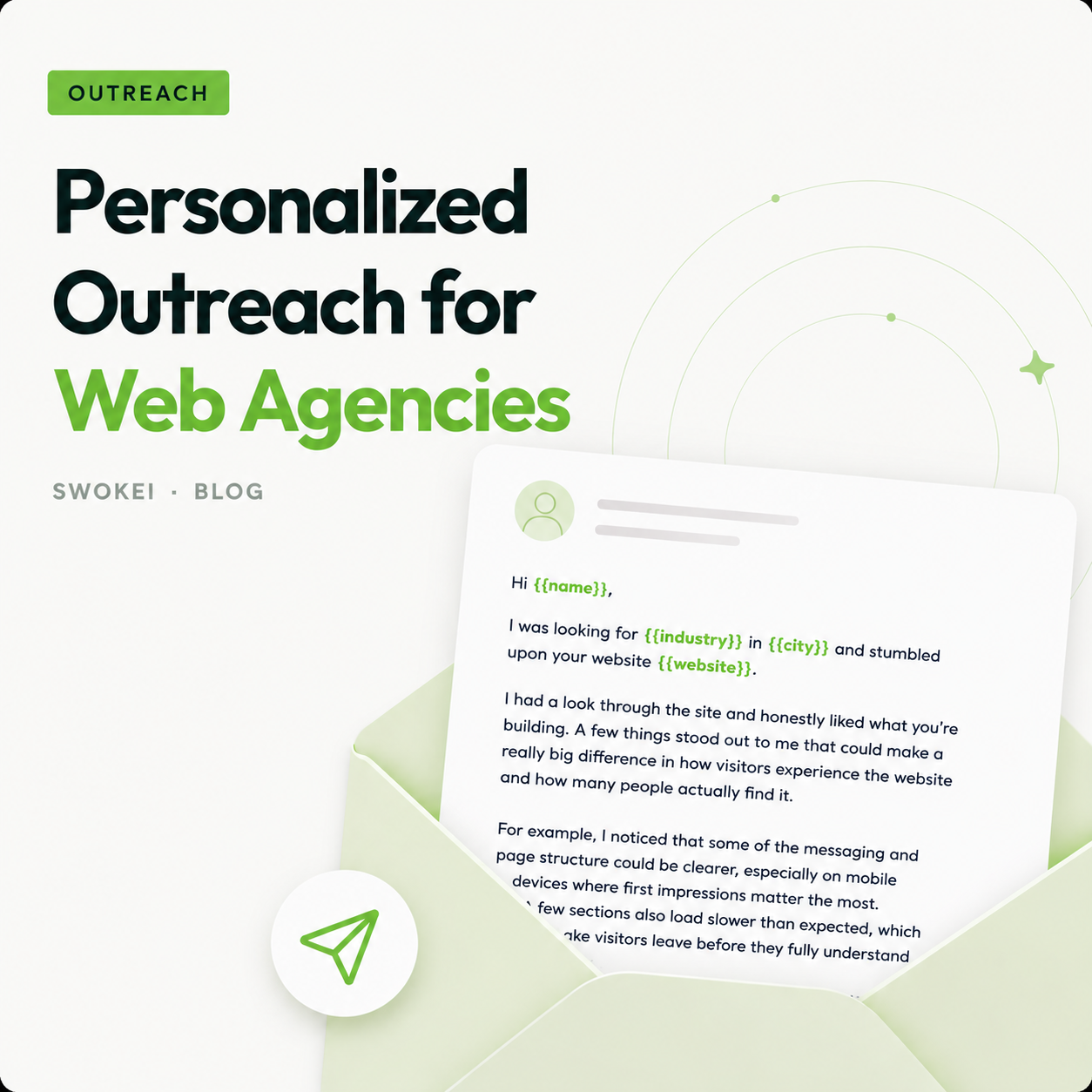
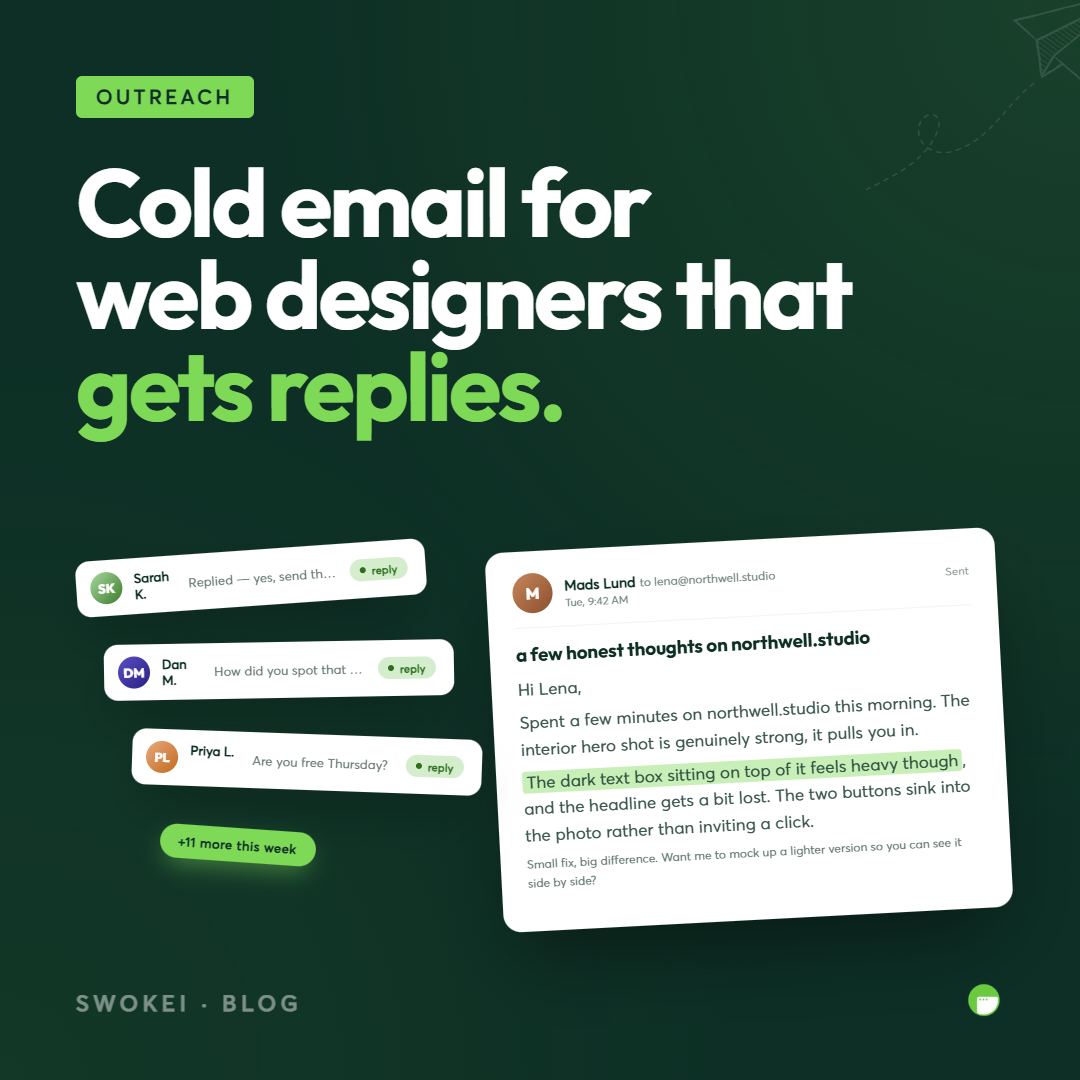
The second win is message quality. Instead of writing from a template and swapping in a company name, your team can build the opening around a concrete observation. That usually leads to cleaner copy because it forces precision. You are no longer saying, "We help brands improve user experience." You are saying, "Your mobile homepage loads slowly and the primary CTA gets buried below a crowded hero section."
The third win is consistency across the team. Good reps can manually spot issues and write sharp emails. Average reps often struggle. An automated system creates a baseline. It helps less experienced team members sound more observant without pretending to be technical consultants.
What to watch out for when choosing an automated website audit tool
The first trap is false precision. Some tools produce neat-looking scores that do not hold up when you inspect the site yourself. If the output feels too generic, too noisy, or too detached from what a prospect can actually see, it will weaken your outreach rather than strengthen it.
The second trap is overengineering. If your team needs to export data, clean it manually, rewrite every finding, and copy everything into another system, the automation is only partial. The tool may still be useful, but it will not create the operational leverage most agencies want.
The third trap is focusing only on technical SEO. That has its place, but redesign deals are often won through a broader case. Prospects respond to issues they can understand quickly: poor mobile experience, dated visual hierarchy, friction in navigation, inconsistent page sections, weak trust signals, and visible performance drag. A tool built only for SEO teams may miss the issues that matter most in agency outreach.
The best results come from audit findings that sound human
This is where many workflows break. The software identifies a problem, but the final email still sounds robotic. Prospects do not reply because they can sense the message was generated from a report, not shaped for a conversation.
A better approach is to treat the audit as source material, not the finished output. The ideal tool should help your team move from issue detection to personalized messaging with very little friction. The language should be plain. The observation should be easy to verify. And the implication should connect to something the business cares about, such as user drop-off, trust, lead quality, or mobile usability.
For example, telling a prospect their Largest Contentful Paint is poor may be technically accurate. Telling them their homepage feels slow on mobile and likely costs attention before visitors reach the main offer is far more usable in outreach. Same issue, better framing.
Automated website audit tool vs manual review
This is not a pure either-or choice. Manual review still matters, especially for high-value accounts. If you are targeting a shortlist of dream clients, a human pass can sharpen the message and catch nuance that automation misses.
But for pipeline building, automation usually wins on economics. It helps you cover more ground, identify better-fit prospects faster, and keep your sales process moving. The practical model for most agencies is a combination: use an automated website audit tool to scan, filter, and generate initial insights, then apply human judgment where deal size or strategic value justifies the extra attention.
That balance matters because not every flaw is worth mentioning. Some issues are technically real but commercially weak. Others are obvious enough to start a conversation immediately. Human review helps you decide which findings are worth leading with. Automation helps you find them at scale.
What this looks like in a modern agency stack
In a well-run outbound workflow, website analysis should not sit in isolation. It should feed prospecting, qualification, message creation, and campaign preparation in one sequence. The less your team has to move between separate tools and rewrite the same insight three times, the better your efficiency will be.
That is why specialist platforms are becoming more relevant than generic scanners. Agencies need systems that do more than analyse a site. They need systems that turn website flaws into personalized outreach assets the team can actually use. If the audit stops at detection, there is still too much manual work left on the table.
Swokei is built for exactly that use case. It helps agencies move from prospect URLs to concrete site findings to inbox-ready outreach without the usual research bottleneck. If your team wants to send fewer generic emails and more messages grounded in real website issues, you can try it with 20 free credits, no credit card required.
The useful test is simple: after the audit runs, can your team send a sharper email within minutes, and will the prospect immediately understand why you reached out? If the answer is no, the tool may be clever, but it is not helping you win more conversations.