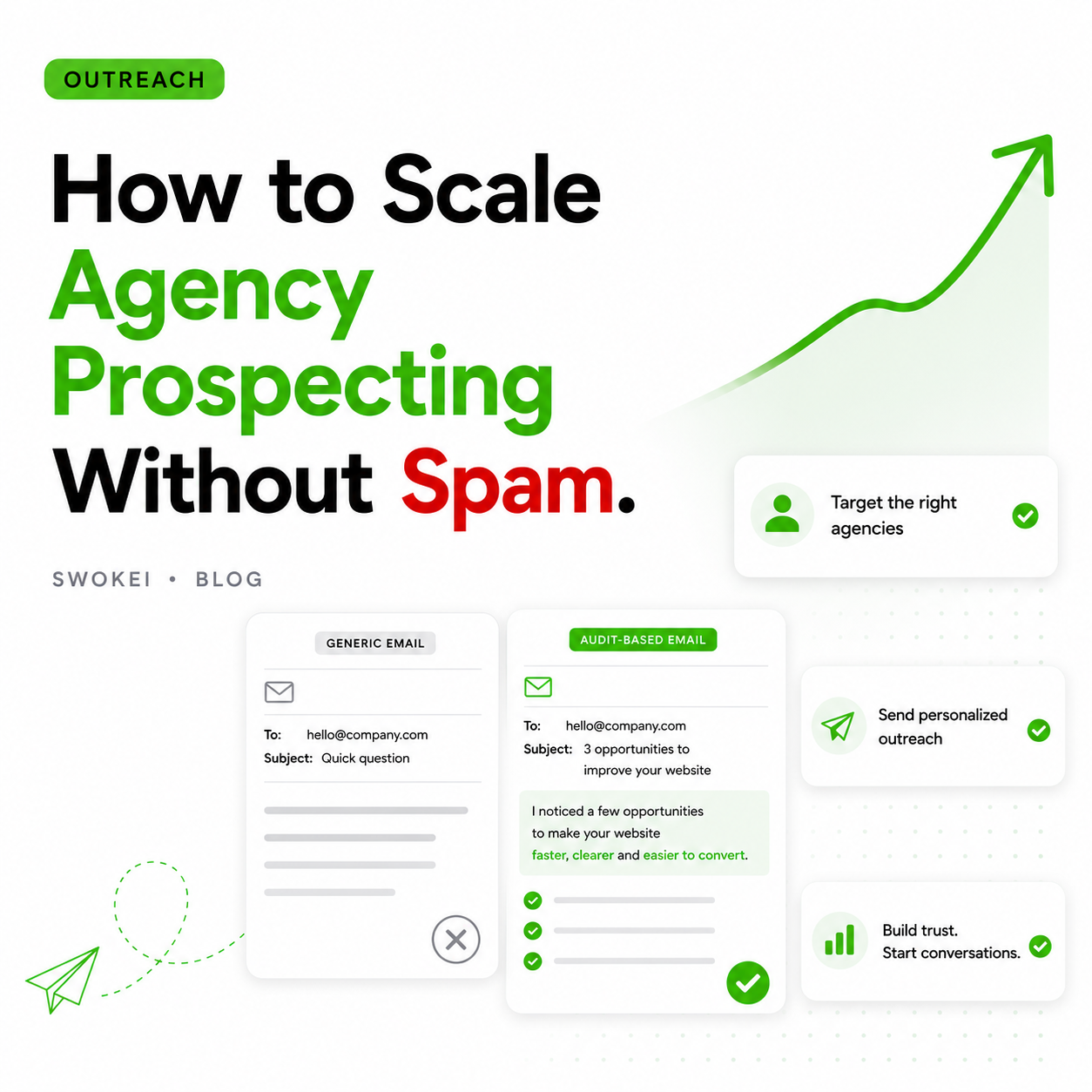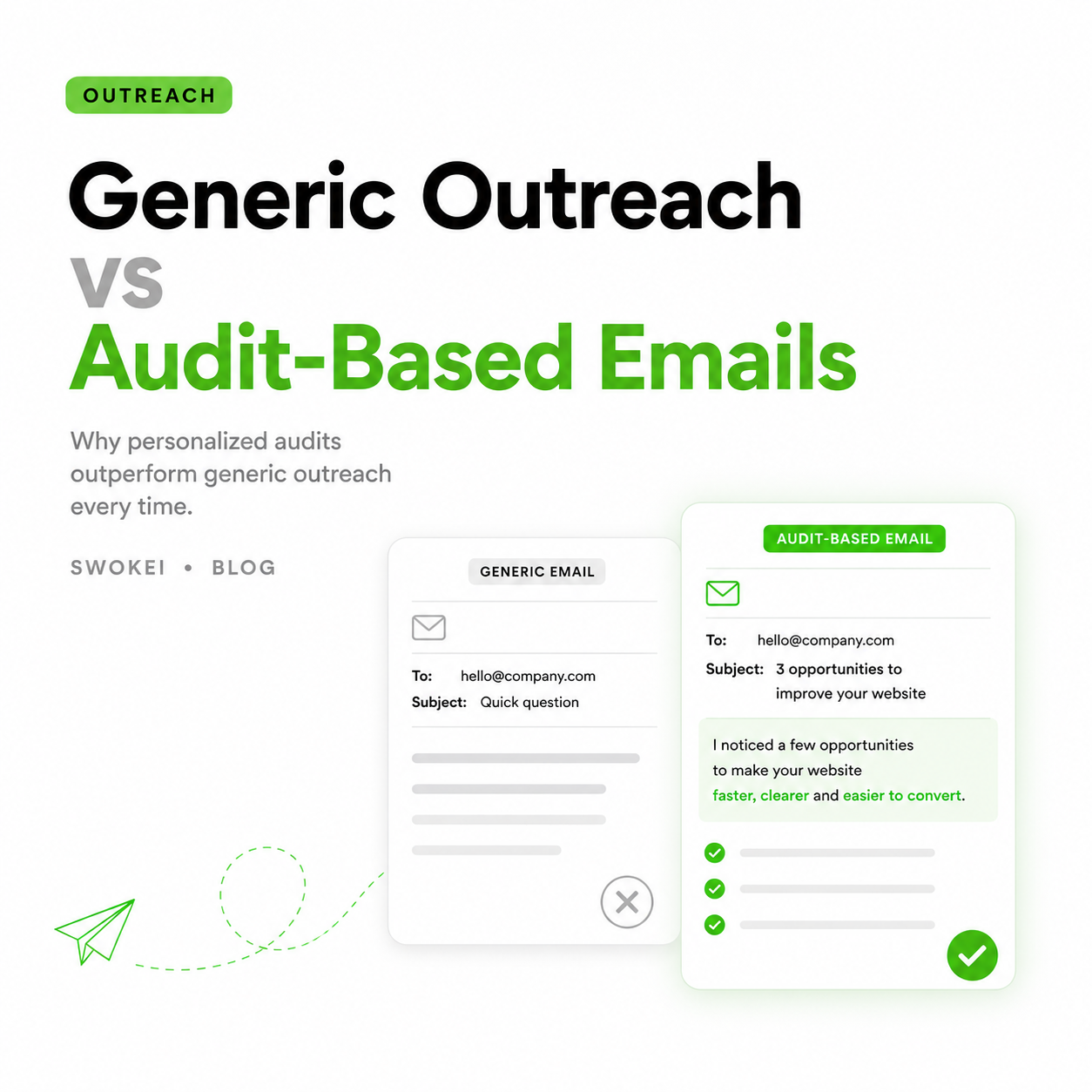
Most web design cold emails fail in the first two lines. They sound interchangeable, make the same vague promise about improving conversions, and give the prospect no reason to believe the sender actually looked at their site. A strong web design agency outreach example does the opposite. It proves relevance fast, ties design issues to business impact, and makes the next step feel easy.
That matters because redesign outreach is harder than broad lead gen. You are not selling a commodity. You are telling a company that the digital front door they already paid for is underperforming. If your message is generic, it reads like noise. If it is too harsh, it creates defensiveness. The sweet spot is specific, commercially aware, and brief.
What makes a web design agency outreach example actually good
A useful outreach example is not just a nice-looking email. It reflects a workflow behind it. Someone identified a real issue, decided that the issue was worth mentioning, framed it in plain language, and connected it to a likely business outcome.
The strongest outreach usually has four parts. First, it references something concrete on the website. Second, it explains why that issue matters. Third, it introduces the agency as the team that can help fix it. Fourth, it asks for a low-friction next step.
Most agencies get one of these parts right and miss the rest. They spot a flaw but do not connect it to impact. Or they pitch hard without proving relevance. Or they personalise the intro and then paste a generic agency paragraph that kills the momentum.
A web design agency outreach example
Here is a simple version that works well for redesign and UX-focused outreach:
Hi Sarah,
I was looking through the Acme Legal site and noticed a few things that may be costing you enquiries.
On mobile, the homepage hero pushes the main CTA well below the fold, and a couple of service pages take long enough to load that some visitors will likely drop before reaching the contact step. I also noticed the navigation gets crowded on smaller screens, which makes the user path harder than it needs to be.
We help firms fix these kinds of design and UX issues as part of conversion-focused website rebuilds.
If useful, I can send over a short teardown with the main issues and a few quick wins specific to your site.
Worth sending?
Tom
This works because it does not try to do too much. It does not pretend to be a full audit. It gives enough detail to feel real, but not so much that it becomes a free consulting document. It also avoids the common mistake of making the agency the star of the message. The site issues come first. The offer comes second.
Why this example gets more replies than generic outreach
The key difference is evidence. When you mention mobile CTA placement, slow-loading service pages, or cramped navigation, the prospect can verify those claims quickly. That lowers scepticism. You are no longer just another agency saying, “we can improve your website.” You are showing that you already found something worth discussing.
There is also a psychological advantage here. Specific observations feel expensive. Even when the analysis is quick, the prospect reads it as effort. That creates a basic level of trust. Generic praise does the opposite because everyone has seen it before.
Another reason this example works is tone. It does not insult the site. It says “may be costing you enquiries” rather than “your website is broken.” That distinction matters. Outreach that feels accusatory gets ignored, even when the diagnosis is right.
How to write your own outreach without sounding spammy
Start with one issue, not five. Agencies often overpack first-touch emails because they want to prove expertise. In practice, too many findings can feel overwhelming or performative. One to three observations is usually enough.
Pick issues that are visible and commercially legible. Slow mobile load speed, weak CTA visibility, confusing navigation, inconsistent page layouts, broken spacing, poor contrast, cluttered forms, and thin service-page structure are all easier to understand than abstract comments about brand architecture.
Then translate the issue into business language. A designer may see poor hierarchy. A prospect sees visitors missing the next step. A developer may see render-blocking resources. A prospect sees a slow page that bleeds attention. The job is not to sound technical. The job is to make the problem relevant.
Finally, keep the ask small. Asking for a 30-minute strategy call in the first email is often too much unless the issue is severe and obvious. Offering a short teardown, a few annotated screenshots, or a quick audit tends to create less resistance.
The anatomy of a high-converting message
The subject line should earn the open without trying too hard. Short options usually work better than clever ones. “Quick note on your website”, “Saw a few UX issues”, or “A few fixes for Acme Legal” are plain, but effective.
The opening line should show it is not a mass email. Mention the company, a page, or a visible issue. If you cannot do that, the message will struggle.
The middle should focus on two things only: what you found and why it matters. Avoid dropping into a long agency introduction. If your agency description takes more space than the website observations, the balance is off.
The close should offer a next step that feels useful even if they do not buy immediately. That is why teardown offers work. They continue the conversation without forcing commitment.
Where most agencies go wrong
The first mistake is fake personalisation. Saying “I love your brand” or “great website” before pointing out problems feels lazy. Prospects can tell when the compliment is boilerplate.
The second mistake is auditing the wrong things. Not every flaw deserves to lead an outreach email. Minor typography preferences or subjective aesthetic choices are weak openers. Focus on issues with likely commercial impact.
The third mistake is scale without quality control. Once agencies try to send outreach at volume, standards drop. Observations become vague, emails become repetitive, and reply rates collapse. That is usually where the economics of manual prospecting start to break.
There is a trade-off here. High personalisation improves relevance, but manual research limits volume. Broad outreach increases volume, but generic messaging lowers response quality. The best outbound systems solve for both by turning real site analysis into repeatable message inputs.
How to operationalise this at scale
If you are sending ten emails a week, manual review can still work. If you are working through hundreds or thousands of URLs, it becomes a bottleneck. At that point, the question is not whether personalisation matters. It does. The question is how to produce it consistently without turning your sales process into an unpaid audit department.
A workable process looks like this: source a relevant list of companies, analyse their websites for visible performance and UX issues, filter out weak opportunities, generate personalised drafts based on those findings, then review before sending. That sequence matters because good outreach starts with signal quality, not copy tweaks.
This is also where precision beats generic AI writing. If the input is “write a cold email for a web design agency,” you get a template. If the input is “homepage CTA is hidden on mobile, product pages are slow, and the header overlaps content on smaller screens,” you get something that sounds observed rather than invented.
For agencies that want that process without the manual drag, Swokei is built for exactly this use case: turning real website flaws into personalised outreach at scale. The practical upside is simple - less time spent researching, more credible first touches, and more qualified redesign conversations. There are 20 free credits, no credit card required.
Matching the example to the type of prospect
Not every prospect should get the same framing. A law firm, SaaS company, local clinic, and manufacturer care about different outcomes. The design flaw may be similar, but the commercial angle should shift.
For a local service business, emphasise missed enquiries and mobile usability. For B2B firms, focus more on trust, clarity, and conversion paths. For ecommerce, speed and product-page friction usually deserve priority. The outreach still follows the same structure, but the language changes based on what the buyer is likely to care about.
This is where many agencies leave money on the table. They personalise at the surface level, using names and company references, but fail to personalise the business case. Real relevance is not just “I saw your website.” It is “I saw an issue on your website that matters to your growth model.”
If you want your outreach to work, make the first email feel earned. Show the flaw. Explain the cost. Keep the ask light. That is usually enough to start a serious conversation.